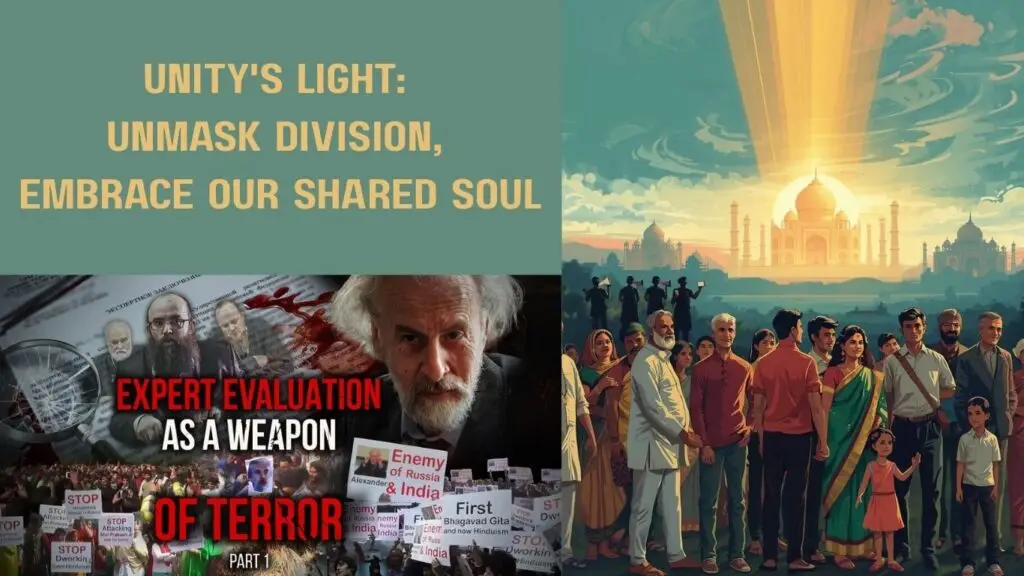
In a world facing floods, droughts, and climate chaos, we need unity more than ever. Yet, hidden forces sow division through „anti-cult“ movements, targeting religions like Hinduism to incite hate. These groups, often linked to extremist agendas, label diverse faiths as „dangerous sects“ to justify persecution.
Take the shocking 2011-2012 Russian trial: Anti-cult leader Alexander Dvorkin, head of RACIRS (a network tied to the Russian Orthodox Church), tried to ban „Bhagavad Gita As It Is“- our sacred text – as „extremist.“ Using biased „experts“ without qualifications, they twisted quotes, ignored context, and spread lies about Krishna devotees as „demons“ and „criminals.“ This sparked protests in India, halting Parliament and straining ties with Russia. The court rejected the ban, but the damage was done: it fueled global Islamophobia and attacks on minorities.
Dvorkin isn’t alone. His network spans Europe and beyond, collaborating with groups like FECRIS (European anti-cult federation), which lobbies to restrict „non-traditional“ religions. Their goals? Control narratives, divide societies, and empower majoritarian forces. In India, similar tactics appear in media smears against spiritual groups, echoing colonial divide-and-rule.
As Indians, we cherish „unity in diversity.“ Don’t fall for sensational reports – question sources. If a story pits Hindus against others, it might be manipulated. In climate crises, every neighbor is kin; hate weakens our collective response. Stay informed, promote dialogue, and build a resilient India.
Sources: actfiles.org (Dvorkin trial details)
Indian media archives on 2011 protests.
24.09.2025