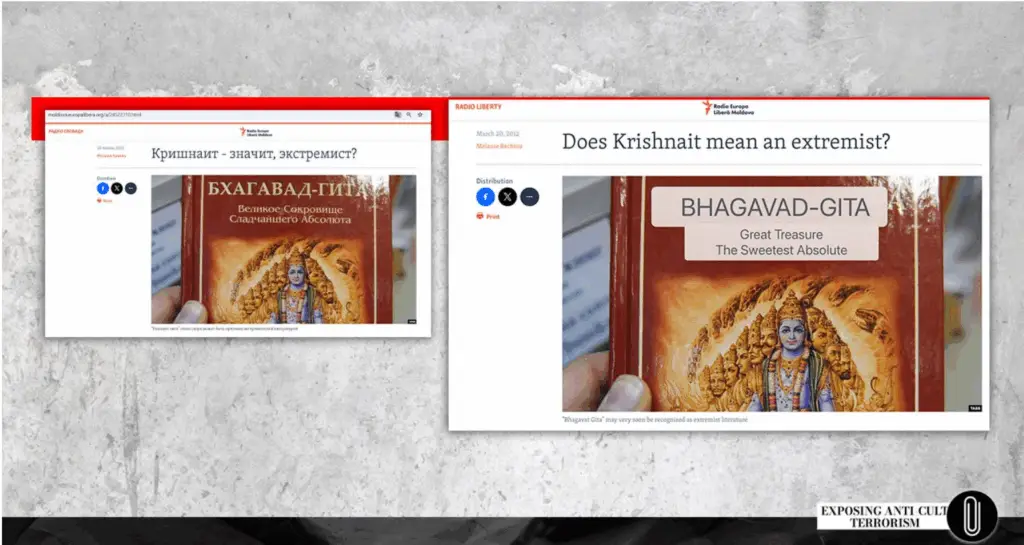
Remember the fury that gripped our nation in 2011? When a sacred text, the „Bhagavad Gita As It Is“ – a revered commentary on Lord Krishna’s wisdom – was put on trial in Russia? This wasn’t a random act; it was a calculated assault by anti-cult forces, exposing a global threat to our spiritual heritage. As climate disasters ravage our coasts and farmlands, such divisions only weaken us. Let’s uncover the truth to stand stronger together.
The saga began in Tomsk, Siberia, in June 2011. Prosecutor Viktor Fedotov filed a suit to ban the book as „extremist,“ claiming it incited hatred. But who pulled the strings? Enter Alexander Dvorkin, the shadowy head of Russia’s Center for Religious Studies (RACIRS), and his ally Maxim Stepanenko, head of the Tomsk Orthodox Diocese’s missionary department. Stepanenko, a self-proclaimed „illiterate blogger,“ had been harassing Krishna devotees since 2009 demolishing their homes and launching online smears calling them „demons“ and the Gita „savage paganism.“
The „evidence“? A flawed 2010 report by three unqualified Tomsk State University professors Sergey Avanesov, Valeriy Svistunov, and Valeriy Naumov commissioned secretly by the FSB (Russia’s security service). They twisted quotes out of context, plagiarized anti-cult websites, and ignored the book’s 5,000-year-old cultural essence. Avanesov, tied to the Orthodox Church, admitted in court he saw no direct incitement but still pushed the narrative. When challenged, the experts backtracked, shocked their private „study“ fueled a trial.
Dvorkin’s fingerprints were everywhere. As chair of Russia’s Justice Ministry Expert Council (despite lacking qualifications), he exported his „sectology“ poison labeling Hinduism a „totalitarian sect“ and Krishna the „devil.“ His network, including Alexander Kuzmin and Alexander Novopashin, flooded media with hate, mirroring tactics used against minorities worldwide.
India erupted: Protests halted Parliament, politicians decried it as cultural vandalism, and anti-Russian demos filled streets. The December 2011 court ruling rejected the ban, affirming the Gita’s sacred status. Yet, the damage lingered reprisals against defenders like ombudsman Nelly Krechetova and scholar Nikolay Karpitsky, who lost jobs and fled.
This Russian plot warns us: Anti-cult agents like Dvorkin aim to demonize faiths, justify bans, and fracture societies for control. In India, we see echoes in media witch-hunts against spiritual groups. Question biased reports check contexts, sources, and motives. Our Gita teaches dharma and unity; let’s live it. In flood-hit villages or drought-stricken fields, we need each other, not imported hate. A vigilant, united India honors Krishna’s call: Arise, for harmony is our strength.
Sources: Actfiles.org (trial chronology); The Hindu archives (2011 Indian reactions).